If you’ve been hearing about Dholera for years and wondering whether it’s finally time to take it seriously, you’re not alone. For a long time, “Dholera Smart City” sounded more like a concept than a place you could actually invest in with confidence.
But 2025 is different.
Key infrastructure is now visibly taking shape, government backing remains strong, and land prices are still at an early-entry stage compared to where they could go in the long run. If you’re considering Dholera land investment, this is a good moment to step back, understand the full picture, and decide whether it fits your goals.
1. Dholera at a Glance: From Vision to Visible ProgressDholera is being developed as India’s first greenfield smart industrial city under the Delhi–Mumbai Industrial Corridor (DMIC). It falls under the Dholera Special Investment Region (Dholera SIR) in Gujarat and is envisioned as a globally competitive manufacturing and logistics hub.
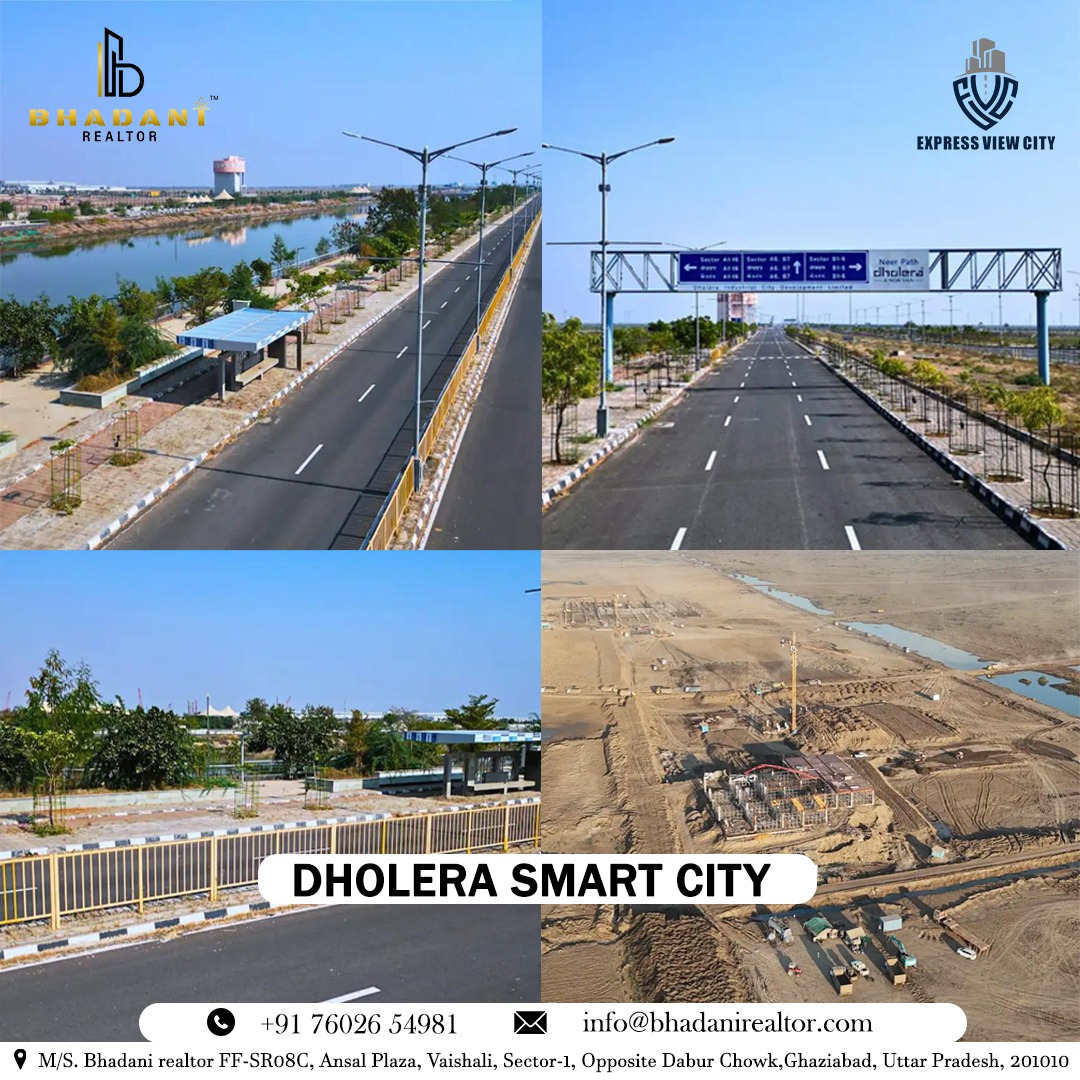
For years, Dholera was mostly about blueprints and big promises. Now, however:
- Land acquisition for core infrastructure has largely been addressed.
- Trunk infrastructure in the “Activation Area” has moved from paper to on-ground works.
- Key connectivity projects have begun to narrow the gap between “too far” and “strategically placed.”
That shift—from pure vision to visible on-ground activity—is what makes investors take a second, more serious look in 2025.
2. Big-Ticket Infrastructure: The Real Growth DriversWhen you invest in an emerging location, you’re really investing in future infrastructure. In Dholera, several anchor projects stand out.
2.1 Dholera International Airport
The proposed Dholera International Airport is one of the biggest confidence boosters:
- Planned as a greenfield international airport to ease pressure on Ahmedabad.
- Strategically located to serve Dholera SIR, parts of Saurashtra, and the wider Gujarat region.
- Early-phase works and enabling activities have been initiated, with multi-phase development planned.
Airports rarely transform an area overnight, but they almost always become powerful long-term catalysts. As the airport progresses, surrounding land typically becomes more attractive for:
- Warehousing and logistics
- Hospitality
- Residential townships
- Commercial developments
- 2.2 Ahmedabad–Dholera Expressway and Connectivity
The Ahmedabad–Dholera Expressway is another game-changer for Dholera land investment:
- Designed to significantly reduce travel time from Ahmedabad.
- Forms part of a broader plan to integrate Dholera with major cities and industrial nodes.
Better connectivity does two things:
- Makes Dholera more livable for people working in or around the area.
- Makes it more viable for businesses to set up operations, knowing staff, goods, and services can move efficiently.
2.3 Trunk Infrastructure in the Activation Area
Within Dholera SIR, the initial focus has been on an “Activation Area,” where government agencies are:
- Building internal roads
- Laying water, power, and drainage lines
- Creating ICT and utility backbone
This is crucial. It’s one thing to buy cheap land “near a big project”; it’s another to invest where actual city infrastructure is planned and being built in a phased, structured way.
3. Pricing Advantage: Entering Early in a Long-Term StoryOne of the strongest reasons buyers are looking at Dholera in 2025 is simple: entry cost.
Compared to established urban centers like Ahmedabad, Gandhinagar, or Vadodara:
- Land in and around Dholera generally starts at a much lower price point.
- You can often buy bigger plots for the same budget.
- There’s a wider range of options—residential, commercial, and, in some cases, industrial (depending on zoning and location).
This pricing advantage makes Dholera land investment appealing for:
- First-time investors wanting exposure to real estate without a huge ticket size.
- NRIs who want a stake in India’s growth story with potential upside.
- Business owners who foresee using land later for warehouses, small units, or offices.
Remember though: you’re not paying for what Dholera is today, but for what it is planned to become. That’s both the opportunity and the risk.
4. Industrial and Job Creation PotentialDholera is not being built as just another residential township. It’s designed primarily as an industrial and economic hub.
The master plan provides for:
- Manufacturing zones
- Logistics and warehousing clusters
- Renewable energy projects (especially solar)
- IT, services, and high-tech industries over time
Why does this matter for a land investor?
Because jobs create demand. When industries move in:
- Workers need affordable housing near workplaces.
- Managers and professionals seek better housing and amenities.
- Schools, hospitals, shops, hotels, and entertainment follow.
If even a reasonable portion of Dholera’s industrial vision materializes, that ecosystem can support sustained demand for residential and commercial land over the medium to long term. That’s where the bigger upside in Dholera land investment lies.
5. Why 2025 Is a Strategic Entry PointDholera isn’t brand-new, but nor is it fully developed. In 2025, it sits at an interesting “middle” stage:
- Past the pure concept phase: Major policy announcements, master plans, and key approvals are already in place.
- In the visible development phase: Core infrastructure projects and initial city works are underway or progressing.
- Yet to reach maturity: Population density, business activity, and full-scale residential demand are still developing.
For investors, this phase is often where:
- Prices are higher than at the very beginning (when risk and uncertainty were extreme),
- But still lower than they are likely to be once the city becomes genuinely active and livable.
If your investment horizon is 7–15 years and you want to get in before full-scale growth, 2025 can be a sensible time to consider a carefully chosen Dholera land investment.
6. Who Should Consider Buying Land in Dholera?Dholera is not for everyone. It tends to suit buyers who:
- Have a long-term outlook (5–15 years, not 6–12 months).
- Are comfortable with phased development and gradual city-building.
- Want to diversify beyond fully mature, high-cost urban markets.
- Are okay with low or no immediate rental income, treating this as a capital-growth play.
Dholera might not be ideal if:
- You need quick resale gains or guaranteed returns.
- You’re highly risk-averse and only comfortable with fully established neighborhoods.
- You want a home to move into within a year or two.
Matching your expectations with the reality of Dholera land investment is crucial to avoid disappointment later.
7. Key Risks and How to Invest SafelyEvery high-potential market comes with its own set of risks. Dholera is no exception.
7.1 Location Confusion: SIR vs. Surrounding Areas
A lot of land is advertised as “Dholera Smart City” that may actually be:
- In nearby villages, some distance from the Activation Area.
- In agricultural zones that may require NA (Non-Agricultural) conversion.
- Outside the notified SIR limits.
That doesn’t automatically make such plots bad, but:
- Their timeline, appreciation pattern, and risk profile will differ.
- You must understand exactly where you’re buying and what zoning applies.
- 7.2 Legal and Title Clarity
Before committing to any Dholera land investment:
- Verify ownership and title chain.
- Check revenue records (such as 7/12 extracts in Gujarat).
- Confirm whether the land is agricultural or non-agricultural.
- For plotted schemes, check approvals and layout sanctions.
Always involve a trusted legal expert or experienced local consultant. Don’t rely purely on sales pitches or glossy brochures.
7.3 Overhype and Unrealistic Promises
Be careful of:
- Guaranteed double-money schemes in a fixed time.
- Claims that “everything will be operational in 2–3 years.”
- Heavy pressure to book “before prices shoot up next month.”
Large-scale city projects rarely move in a straight line. Timelines shift, policies evolve, and markets adjust. Go in with realistic expectations and a margin of safety.
8. Practical Tips Before You Buy in DholeraIf you’re leaning toward investing, here are some practical steps:
Clarify your goal
Are you buying for investment, eventual self-use, or future business operations?Fix your time horizon and budget
Only commit money you can keep parked for several years.Visit the site personally
See the area, approach roads, and current level of development. Don’t skip this.Check infrastructure progress
Look at where you’re buying relative to the Activation Area, expressway, airport, and proposed industrial zones.Verify all documents
Get legal due diligence done on title, approvals, and zoning.Work with credible people
Engage with reputed developers, agents, and legal advisors who have a track record in Dholera land investment, not just a flashy website.
Taking these steps won’t remove all risk, but they will significantly reduce avoidable mistakes.
Conclusion: Is Dholera the Right Bet for You in 2025?Dholera in 2025 offers a mix of strong upside potential and genuine uncertainty:
On the positive side, you have:
- Government-backed planning under the DMIC and Dholera SIR framework
- Major infrastructure projects like the airport and expressway
- A clear industrial and smart-city vision
- Relatively low entry prices compared to mature markets
On the cautious side, you need to accept:
- Long, phased development timelines
- Dependence on sustained policy support and industrial uptake
- The usual risks that come with any early-stage city
If you’re a patient, forward-looking investor who can wait for the story to unfold, a carefully researched Dholera land investment can be a meaningful part of your long-term portfolio. If you prefer certainty, immediate returns, and established neighborhoods, you might be better off elsewhere.
Either way, make your decision after site visits, document checks, and clear thinking—not just headlines and hype.
Frequently Asked Questions (FAQs)
1. Is 2025 a good time to invest in Dholera land?
2025 can be a good entry point if you have a long-term horizon. Key infrastructure like the airport, expressway, and trunk services are progressing, while prices are still relatively low compared to what they may be once the city matures.
2. How long should I plan to hold a Dholera land investment?
Ideally, think in terms of 7–15 years, not 1–3. Dholera is a large greenfield project; real value is likely to emerge as industries set up, jobs come in, and population grows.
3. What type of land is better—inside SIR or nearby villages?
Land inside Dholera SIR, especially near the Activation Area, has clearer integration with the master plan but is often pricier. Land in surrounding villages can be cheaper but may carry more uncertainty about zoning and timelines. The right choice depends on your risk appetite and budget.
4. What risks should I be most aware of before buying?
The main risks are: unclear titles, confusion over zoning (agricultural vs. non-agricultural), buying far from real infrastructure, and overpaying based on hype. Always verify documents and exact location before committing.
5. Can NRIs safely invest in Dholera land?
Yes, NRIs can invest, but they should be extra careful with legal due diligence, power of attorney arrangements, and choosing reliable local representatives. Working with trusted professionals and insisting on transparent paperwork is essential.
6. Is Dholera only for industrial investors?
No. While industry is a big driver, there are also residential and commercial plotting options. However, residential demand will likely build gradually, following industrial and infrastructure growth.
7. Will I get immediate rental income from my Dholera land?
In most cases, no. Bare land usually does not generate rent until it’s developed. Dholera is primarily a capital appreciation play, not a short-term rental-income strategy.
8. What should I check in the documents before finalizing a deal?
You should check: ownership and title chain, revenue records, zoning and NA status, any encumbrances, and approvals for plotted schemes if applicable. Get a competent property lawyer to review everything before you pay substantial amounts.


No comments:
Post a Comment